


Handheld Ultrasound: The Missing Visual Layer in Frontline Care
Vitania explores how handheld ultrasound can support GPs, nurses, aged care and community care teams in Singapore by adding a focused visual layer to early assessment, triage and escalation decisions — without replacing formal imaging.
VITANIA
6/12/20268 min read
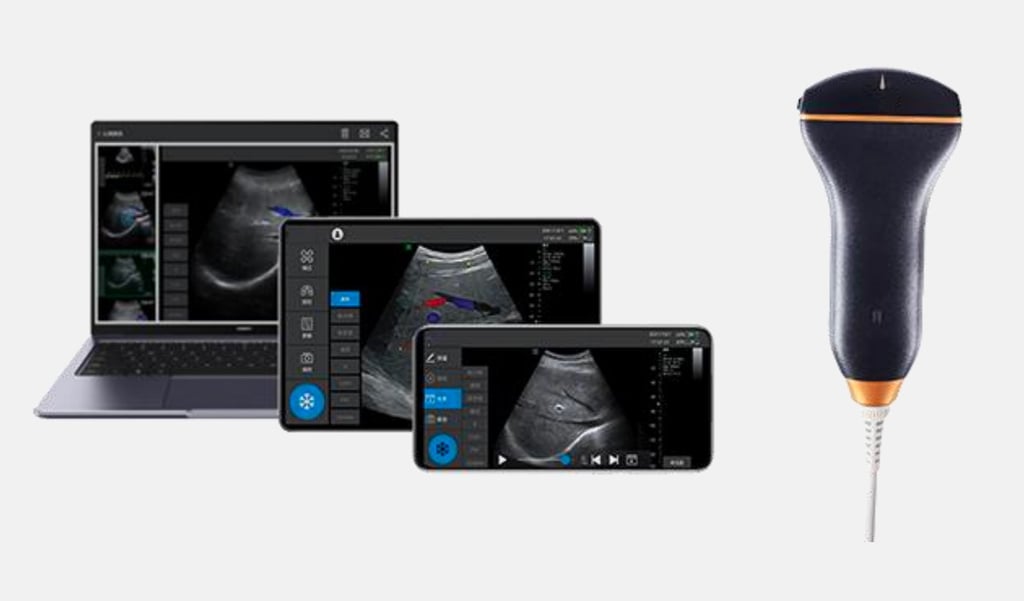
Singapore’s healthcare system is moving steadily towards earlier intervention, stronger primary care relationships, and better support in the community. Healthier SG has made this direction explicit: more care should happen before deterioration, closer to where people live, and with stronger coordination between GPs, nurses, community teams and hospitals.
In that context, handheld ultrasound deserves a more serious conversation.
For too long, ultrasound has been seen mainly as a radiology service or a specialist procedure. That view is understandable, but increasingly incomplete. The rise of handheld and wireless ultrasound does not mean that every clinic should become an imaging centre. It does mean that selected frontline clinicians can now access a visual layer of information that was previously unavailable at the first point of care.
That distinction matters.
Handheld ultrasound is not a smaller radiology department. It is a focused clinical decision tool. Used responsibly, it can help GPs, nurses and community care teams explore early symptoms, recognise red flags sooner, and make better decisions about referral, escalation or monitoring.
This role remains seriously underestimated.
The gap between examination and imaging
A patient presents to a GP clinic with lower abdominal discomfort, urinary symptoms, breathlessness, flank pain, leg swelling, a superficial lump or an unclear soft-tissue complaint.
The traditional pathway is familiar: history, physical examination, blood or urine tests, and then referral for imaging if the clinical concern is significant enough. In many cases, that remains the right approach.
But there is often a gap between what the clinician can infer at the bedside and what formal imaging later confirms.
Is the bladder visibly distended?
Is there obvious hydronephrosis?
Is there pleural fluid?
Is the soft-tissue swelling cystic or solid-looking?
Is there free fluid?
Is this a patient who can be monitored, or someone who needs escalation today?
These are not always questions that require a full radiology report at the first encounter. Sometimes they require a focused look.
That is where point-of-care ultrasound has value. It helps clinicians move from educated suspicion to more informed triage.
POCUS is an extension of clinical assessment, not a replacement for radiology
The most common mistake in discussions about handheld ultrasound is asking whether it can replace formal ultrasound.
In most settings, it should not.
Formal diagnostic ultrasound remains essential. It provides comprehensive scanning, trained sonographer expertise, specialist reporting, quality control and documentation. It is the right standard for definitive assessment.
Point-of-care ultrasound has a different purpose. It answers focused clinical questions in real time.
A GP assessing bladder retention is not performing a full urology ultrasound.
A nurse using ultrasound to support difficult vascular access is not replacing a vascular laboratory.
A clinician checking for pleural fluid is not replacing a radiologist.
A community care team using ultrasound to support an escalation decision is not making a final imaging diagnosis.
They are adding a visual layer to frontline clinical judgement.
This is the correct way to position handheld ultrasound in Singapore: not as a substitute for existing imaging services, but as a tool that can improve the quality and timing of first decisions.
Why this matters in Singapore
Singapore is not short of hospitals or specialist expertise. The issue is not whether advanced imaging exists. It does.
The issue is whether every early clinical uncertainty should travel through the hospital system before a more informed first decision can be made.
Singapore’s healthcare direction is increasingly community-facing. Healthier SG strengthens the role of family doctors. Primary Care Networks provide nursing, care coordination and ancillary support to GP clinics. Community care teams are becoming more important as the population ages. Nursing homes and home-care settings are managing frailer patients with more complex needs.
In this environment, handheld ultrasound is not a gadget. It is part of a broader question:
What diagnostic capability should sit closer to the patient?
A GP clinic does not need a full imaging department to benefit from focused ultrasound. A nursing home does not need to become an acute hospital to use ultrasound for bladder assessment. A nurse does not need to become a sonographer to use protocol-based ultrasound for vascular access or selected bedside checks.
The opportunity is not to decentralise everything. The opportunity is to move selected, high-value information earlier in the care pathway.
The first value is exploration
The most powerful use of handheld ultrasound is often not diagnosis. It is exploration.
That may sound modest, but it is clinically important.
A frail elderly resident becomes confused and restless. Is urinary retention part of the picture?
A patient has flank pain. Is there a visual clue suggesting obstruction?
A breathless patient has borderline oxygen saturation. Is there pleural fluid or a lung pattern that supports escalation?
A patient with a painful swelling may need differentiation between cellulitis and a possible collection.
A patient with difficult veins has already experienced repeated failed cannulation. Can ultrasound help find a safer access route?
In each case, ultrasound does not replace clinical reasoning. It sharpens it.
This is why handheld ultrasound should be seen as a “first-look” tool. The first look does not close the case. It improves the next step.
A natural fit for GP-led care
GPs manage uncertainty every day. They see early disease, vague symptoms, atypical presentations and patients who do not yet fit a neat diagnostic category.
That makes primary care one of the most logical environments for focused ultrasound.
The best starting point is not complex cardiac imaging or broad abdominal scanning. It is a small set of common, teachable and clinically useful questions.
For example:
Is the bladder significantly distended?
Is there a clear post-void residual concern?
Is there a superficial fluid collection?
Is there an obvious pleural effusion?
Are there selected renal or gallbladder findings that justify formal imaging or urgent referral?
Can ultrasound support safer minor procedures or injections in appropriate settings?
These applications are not about turning GPs into radiologists. They are about giving family doctors a more informed way to manage common uncertainties.
In Singapore, where GP relationships are being strengthened through Healthier SG, this could become particularly relevant. A family doctor who knows the patient, understands their baseline function, and can use a focused scan within a defined scope may be better placed to decide when to reassure, when to monitor, and when to refer.
Nurses should be part of the discussion
The role of nurses in handheld ultrasound is often overlooked.
That is a mistake.
Nurses are frequently closest to the patient. They are often the first to recognise urinary retention, deterioration, fluid-related issues, difficult vascular access, catheter problems, or subtle changes in frail elderly patients.
In many healthcare systems, nurse-performed ultrasound is already established in specific areas such as bladder scanning and ultrasound-guided peripheral IV access. The question is not whether nurses can use ultrasound. The question is where, under what governance, and for which clinical questions.
In Singapore, this should be considered carefully and professionally.
Suitable nursing-led or nursing-supported applications may include:
Bladder volume assessment
Post-void residual checks
Catheter troubleshooting
Ultrasound-guided peripheral venous access
Bedside assessment under defined escalation protocols
Support for community and aged-care triage pathways
These uses should be protocol-based. They should be trained, supervised, documented and audited. The findings should trigger clear next steps rather than sit as isolated observations.
Handled properly, handheld ultrasound can strengthen nursing practice. It can reduce repeated failed cannulation, avoid unnecessary catheterisation, support earlier escalation and improve confidence in community-based care.
Aged care may be where the impact is most visible
The strongest argument for handheld ultrasound may come from aged care.
Older patients often present differently. Urinary retention may appear as agitation. Infection may present without classic symptoms. Respiratory decline may be subtle. Moving a frail resident to hospital may be necessary, but it is never trivial.
A handheld ultrasound probe will not turn a nursing home into a hospital. Nor should it.
But it can help answer selected questions before deciding whether transfer is required.
A resident with low urine output and discomfort may need a bladder check.
A resident with worsening breathlessness may need a more informed escalation decision.
A resident with a painful swelling may need faster differentiation between monitoring and referral.
A resident after a fall may require a clearer triage pathway.
A resident with recurrent symptoms may benefit from earlier recognition of patterns.
This is where handheld ultrasound aligns with the real needs of community care: not maximal diagnosis, but better first decisions.
In a healthcare system managing an ageing population, small improvements in early assessment can have large operational consequences. They may reduce avoidable transfers, shorten time to escalation, support more appropriate referrals, and give clinicians more confidence in managing patients closer to home.
Handheld ultrasound belongs inside the POCT ecosystem
At Vitania, we view handheld ultrasound as part of the broader point-of-care ecosystem.
Molecular POCT can identify pathogens and resistance markers.
Blood-based POCT can support inflammation, cardiac, metabolic or coagulation assessment.
AI-enabled monitoring can identify behavioural and safety risks in care environments.
Handheld ultrasound adds something different: anatomy, movement and fluid.
That visual information is often missing at the front line.
A GP can suspect urinary retention, but ultrasound can show a distended bladder.
A nurse can suspect difficult vascular access, but ultrasound can show the vessel.
A clinician can suspect pleural fluid, but ultrasound can support the decision to escalate.
A community team can assess symptoms more confidently when a focused scan adds visual context.
This is the real promise of POCT: not isolated devices, but practical decision support closer to the patient.
The device is small. The governance must not be.
Handheld ultrasound should not be promoted casually.
Ultrasound is operator-dependent. Poor image acquisition can mislead. Overconfident interpretation can delay referral. Incidental findings can create anxiety. Unclear professional boundaries can create risk. Devices without proper maintenance, documentation and infection control can compromise safety.
The solution is not to avoid handheld ultrasound. The solution is to implement it properly.
A credible programme should include:
Defined clinical indications
Clear user groups
Scope-of-practice boundaries
Structured training
Competency assessment
Standard scanning protocols
Image storage and documentation rules
Escalation pathways
Quality review
Infection control procedures
Alignment with local regulatory and institutional requirements
This is where serious providers will separate themselves from superficial adopters.
The technology may be portable, but the governance must be institutional.
The Singapore opportunity: practical, not sensational
Singapore does not need a sensational story about handheld ultrasound.
It needs a practical one.
The country already has strong hospitals, regulated healthcare services, trained clinicians and a growing community care agenda. Handheld ultrasound should be positioned within that maturity.
It should not be advertised as a shortcut.
It should not be sold as a replacement for radiology.
It should not be placed into clinical environments without training.
It should not be used beyond the competence of the operator.
Instead, it should be introduced as a focused capability for specific clinical questions where earlier visual information can improve decisions.
That is the professional opportunity.
For GP clinics, it can support selected symptom exploration and procedural confidence.
For nurses, it can support bladder assessment and vascular access workflows.
For aged care, it can support earlier triage and escalation decisions.
For community care teams, it can add a visual layer to assessment.
For hospitals, it can reduce unnecessary delays in frontline evaluation while preserving formal imaging for definitive diagnosis.
This is not about more technology for its own sake. It is about better placement of diagnostic capability.
A better first look
The stethoscope changed medicine because it allowed clinicians to access information that could not be seen.
Handheld ultrasound offers a similar shift, but visually.
The comparison is not perfect. Ultrasound requires more training, stronger governance and more careful interpretation than a stethoscope. But the direction is similar: it expands what a clinician can know at the bedside.
The future of handheld ultrasound in Singapore should not be framed as radiology versus POCUS. That is the wrong debate.
The better question is this:
Which clinical decisions would improve if frontline teams had a safe, focused and well-governed first look?
For many GP, nursing, aged care and community settings, the answer may be: more than we currently realise.
Handheld ultrasound has been underestimated because it has been viewed as a smaller version of a traditional imaging machine.
It should be understood differently.
It is a frontline visual decision layer.
And in a healthcare system moving towards earlier intervention, stronger primary care and care closer to home, that layer may become increasingly important.
References and Source Materials
Vitania. Accessible Point-of-Care Solutions.
Vitania. Ultrasound demonstration video.
Guangzhou Sonostar Technologies Co., Ltd. Wireless Probe Type Ultrasound Scanner — Instructions for Use.
Guangzhou Sonostar Technologies Co., Ltd. FDA 510(k) listing: Wireless Probe Type Ultrasound Scanner, UProbe-C / UProbe-L / BProbe.
Manufacturer technical and regulatory file package reviewed by Vitania: CE certificate, Declaration of Conformity, ISO documentation, English user manual, product brochure, UProbe-C3 technical specifications, labels and manufacturer authorisation letter.
Singapore Medical Association. Ultrasound in Primary Care.
SingHealth Academy. SGH Internal Medicine POCUS Course.
Ministry of Health Singapore. Healthier SG White Paper and primary care transformation materials.
Ministry of Health Singapore. Primary Care Networks and GP team-based care materials.
British Medical Ultrasound Society. Focused and Point-of-Care Ultrasound guidance and governance resources.
American Academy of Family Physicians. Point-of-Care Ultrasound: A Practical Guide for Primary Care.
Andersen CA et al. Point-of-Care Ultrasound in General Practice: A Systematic Review.
Bhagra A et al. Point-of-Care Ultrasonography for Primary Care Physicians and General Internists.
Frasure SE et al. Application of Point-of-Care Ultrasound for Family Medicine Physicians.
Santos VB et al. The use of point-of-care ultrasound in nurses’ clinical practice.
✉️ Email Address:
📍Singapore Headquarters:
14, Robinson Road, #08-01A
Far East Finance Building
Singapore 048545
📍United Kingdom Office:
71–75 Shelton Street
London, WC2H 9JQ
United Kingdom