

Singapore as a Strategic Launchpad for Medtech Innovation
Singapore is widely regarded as one of the most mature and rigorously regulated healthcare markets in Southeast Asia and the broader Asia Pacific. It serves as the region’s medical hub, offering Asia’s best healthcare system with a reputation for strict standards and international credibility.
VITANIA
1/27/20267 min read


Singapore is widely regarded as one of the most mature and rigorously regulated healthcare markets in Southeast Asia and the broader Asia Pacific. It serves as the region’s medical hub, offering Asia’s best healthcare system with a reputation for strict standards and international credibility[1].
According to the 2023 Legatum Prosperity Index, Singapore ranked first worldwide in the health category[2], and it consistently attracts nearly half a million foreign patients each year thanks to its high quality medical services[1]. For medical technology and device companies, achieving real-world implementation within Singapore’s public healthcare system signals that their solutions have met the bar of a highly demanding environment.
It suggests a strong foundation for replicating and scaling into Southeast Asian and other international markets, given Singapore’s influence and connectivity in the region[3]. Notably, Singapore’s healthcare institutions do not make empty promises or quick endorsements. Instead, they follow a clear, methodical pathway for new innovations typically moving through phases of “understand – pilot – evaluate – expand”and each step’s outcomes carry significant demonstrative and reference value in proving the solution’s merit[4].
This unique ecosystem of stringent regulation, credible clinical validation, and a broad demonstration effect makes Singapore an ideal launchpad for medtech companies aiming to enter Southeast Asia and beyond.
Stringent Regulation as a Global Amplifier
Singapore’s regulatory framework for medical devices is among the strongest in the region, anchored by the Health Sciences Authority (HSA). The HSA’s oversight is grounded in global best practices – for example, Singapore adopts classification rules derived from the Global Harmonization Task Force guidelines, ensuring alignment with international standards[5]. Singapore was also one of the first countries to fully implement the ASEAN Medical Device Directive (AMDD), a regional regulatory harmonization effort[6]. In fact, Singapore, Malaysia, and Indonesia are already fully compliant with the AMDD, which means that a device meeting HSA’s requirements is well-positioned to satisfy regulatory criteria across the 600-million population ASEAN common market[6].
The rigor of HSA’s approval process and its international alignment significantly amplify a product’s credibility and market reach. HSA’s high standards are acknowledged globally in 2023 the World Health Organization designated HSA as a “WHO-Listed Authority” for its medicines regulatory system, recognizing that Singapore operates at an advanced level of regulatory performance ensuring top-tier safety, efficacy, and quality[7]. Such recognition fosters reliance on HSA’s decisions by other regulators. For instance, Australia’s Therapeutic Goods Administration (TGA) has recognized Singapore’s HSA as a Comparable Overseas Regulator, putting HSA in the company of the EU, US, Canada, and Japan. As a result, medical devices approved by HSA are now eligible for expedited review in Australia, markedly shortening time-to-market for those products[8]. Likewise, a regulatory reliance program with Thailand means the Thai FDA uses HSA’s review reports to fast-track device approvals reducing average review times from 150 days to just 60 days and lowering costs[9][10].
In short, an HSA approval not only opens the Singapore market; it also serves as a springboard to other markets by virtue of Singapore’s regulatory reputation. Companies launching in Singapore benefit from a seal of approval that many other jurisdictions trust, accelerating their pathway to regional and even global distribution.
Credibility of Singapore’s Public Healthcare Institutions
A second pillar of Singapore’s launchpad advantage is the clinical credibility and influence of its public hospitals. Singapore’s healthcare institutions – from general hospitals to specialty centers – are known for their world-class quality, patient safety, and rigorous evaluation of new technologies.
Singapore General Hospital, for example, was recently ranked among the top 10 hospitals globally by an international rating[2]. Moreover, 13 hospitals and healthcare facilities in Singapore hold the gold standard Joint Commission International accreditation, underscoring the country’s commitment to meeting global benchmarks for healthcare excellence[1]. This strong reputation means that when a Singapore public hospital adopts or endorses a new medical device or solution, it sends a powerful signal to other clinicians and health systems. An endorsement from Singapore’s healthcare system equates to a mark of quality and reliability in the eyes of regional partners and investors.
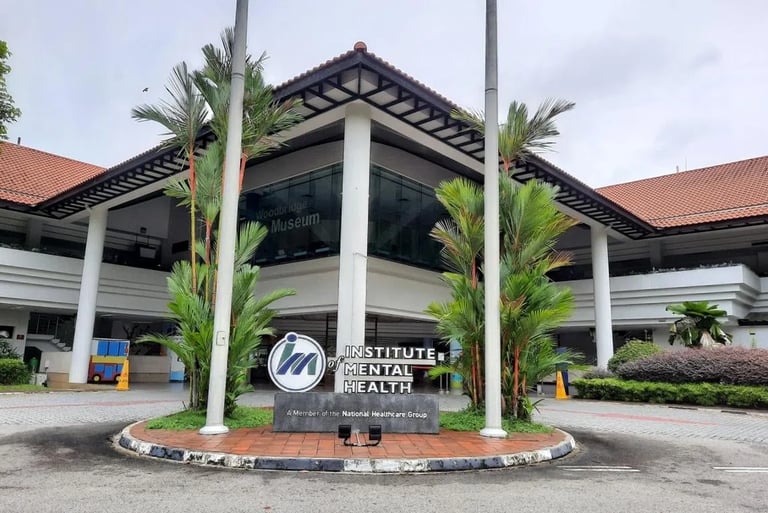
Institute of Mental Health (IMH) in Singapore, a 2,000 bed national specialty hospital under NHG. Solutions proven in such leading public institutions gain significant credibility regionally.
Singapore’s public healthcare network which includes clusters such as the National Healthcare Group (NHG), SingHealth, and National university health system emphasizes evidence based innovation and patient-centric outcomes. These institutions typically subject new technologies to thorough real-world trials before broad implementation.
As the local adage goes, Singapore’s hospitals “understand, pilot, evaluate, then expand” innovations rather than rushing unproven tech into use[4]. For example, NHG operates a dedicated Centre for Healthcare Innovation to incubate front line solutions, explicitly stressing the importance of “real scenarios, real needs, real user feedback” in judging any new healthcare technology[11]. In practice, this means that a medtech company must demonstrate clear clinical value and usability in a pilot within a Singapore hospital; but once it does, the results carry weight. Each successful pilot generates concrete data and user testimonials from a top-tier clinical environment, which can be referenced elsewhere as proof of efficacy and safety. Indeed, having a Singapore public hospital as a reference customer or trial site is often enough to open doors in other markets. Regional healthcare providers know that Singapore institutions demand high standards, so a product vetted and used in Singapore comes with built-in credibility.
Furthermore, Singapore’s public hospitals often serve as regional centers of excellence, treating patients from across Southeast Asia and beyond. A notable example is the Institute of Mental Health, Singapore’s national psychiatric hospital under NHG, which has over 2,000 beds and is one of the largest mental health centers in Asia[12]. IMH and other leading Singapore hospitals regularly host international visitors and share best practices across borders. Thus, when an innovation is validated in such an institution, it gains visibility among a broad professional network. The clinical endorsement by Singapore’s hospitals effectively derisks the technology in the eyes of other healthcare systems, who often view Singapore as a bellwether for quality.
In sum, integration into Singapore’s healthcare system provides medtech firms not just a prestigious testing ground, but also a compelling proof point that resonates with clinicians and health administrators region wide.
Regional and Global Demonstration Effect
Singapore’s impact extends well beyond its borders; success in Singapore often serves as a demonstration effect for the wider region and even globally. There is a clear “seeing is believing” phenomenon at work: if a new medical device or digital health solution can thrive under Singapore’s stringent oversight and be embraced by its clinicians, stakeholders in other countries take note.
Neighboring ASEAN markets, in particular, look to Singapore as a model. It is no coincidence that regulators in the region are formalizing reliance on Singapore’s evaluations as seen with Thailand’s fast-track program using HSA approvals[9] – and that Singapore’s full adherence to the AMDD framework positions it as a reference regulatory jurisdiction for Southeast Asia[6]. In practical terms, a medtech company that has navigated Singapore’s regulatory and clinical requirements will find it simpler to approach other ASEAN countries, which increasingly share similar classification criteria and approval standards under the harmonized system[6].
The demonstration effect also works on a market perception level: a product proven in Singapore is far more likely to be trusted by distributors, hospital procurement teams, and even patients across the region. It reduces the uncertainty for early adopters in other countries.
Globally, Singapore’s stamp of approval carries weight as well. Many multinational medtech firms choose Singapore as the site for Asia-Pacific launches or key opinion leader studies, knowing that positive results there will be compelling internationally. With HSA’s new status as a TGA recognized regulator, an approval in Singapore can directly expedite entry into developed markets like Australia[8].
More broadly, Singapore’s involvement in international regulatory and clinical networks means innovations proven in Singapore gain exposure on the world stage. Singapore regularly hosts global healthcare conferences and its institutions partner with renowned organizations (Duke University, Cedars-Sinai, HIMSS and others have a presence in Singapore[13]), which further amplifies the visibility of local pilot successes. In effect, launching in Singapore allows a medtech innovation to build a track record in a highly respected environment, creating a ripple effect of acceptance. By the time a company approaches other national markets or even investors and partners elsewhere, the question of “Has this been tried somewhere credible?” is already affirmatively answered by the Singapore experience. This demonstration effect shortens adoption curves and opens doors internationally, providing a springboard toward global expansion.
From its stringent regulatory regime to its world class public hospitals and far-reaching influence, Singapore offers a uniquely strategic platform for medical technology companies charting an international growth path. Gaining HSA approval ensures that a product meets high standards aligned with the world’s top regulators, instilling confidence and enabling faster entry into other markets.
Likewise, deploying a solution in Singapore’s demanding clinical environment and earning the endorsement of its leading healthcare institutions confers a mark of excellence that resonates with clinicians and regulators throughout the region. Each successful pilot or adoption in Singapore becomes a case study that can be leveraged across Southeast Asia and beyond, validating the solution’s value in a real world setting. In essence, Singapore provides not just a first market, but a launchpad that amplifies credibility and demand globally. Armed with Singapore as a reference point, medtech and medical device innovators are far better positioned to navigate the complexities of regional regulations, gain trust from healthcare providers, and scale their impact to new markets.
For these reasons, Singapore stands out as a natural springboard for healthcare innovation a place where robust oversight and clinical excellence translate local success into broader international opportunity[1][14].
Reference:
[1] [2] [5] [6] [13] Singapore - Healthcare
https://www.trade.gov/country-commercial-guides/singapore-healthcare
[3] [4] [11] [12] 新加坡 NHG × IMH招商说明.docx
[7] [14] HSA Singapore Designated as WHO-Listed Authority for its Medicines Regulatory System
https://www.hsa.gov.sg/announcements/news/hsa-whowla2023
[8] Singapore: HSA has been recognized as a comparable overseas regulator for medical devices by the TGA
[9] [10] Thailand FDA and Singapore HSA Regulatory Reliance Program | Emergo by UL
https://www.emergobyul.com/news/thailand-fda-and-singapore-hsa-regulatory-reliance-program
✉️ Email Address:
📍Singapore Headquarters:
14, Robinson Road, #08-01A
Far East Finance Building
Singapore 048545
📍United Kingdom Office:
71–75 Shelton Street
London, WC2H 9JQ
United Kingdom